
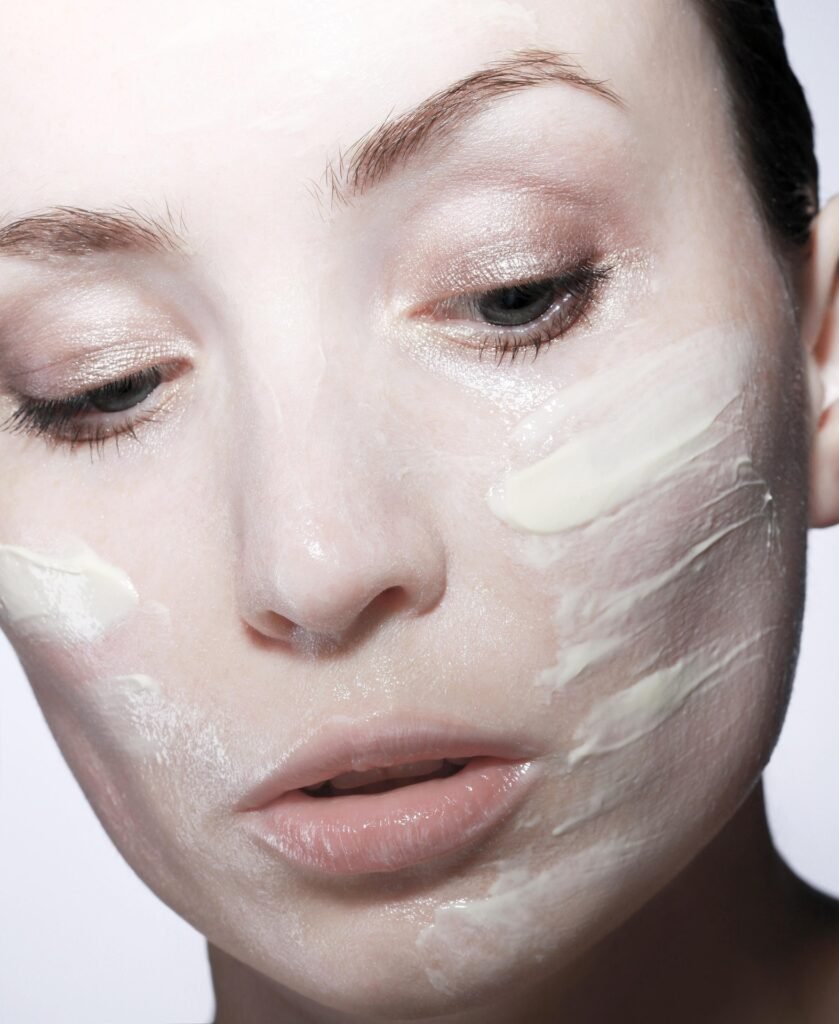
Does a thick cream actually hydrate better? We break down moisturizer texture vs results, explaining why gels, lotions, and balms work differently for your skin barrier.
Moisturizer Texture vs Results: The Truth About Hydration (Stop Wasting Money)
You open a jar of luxury moisturizer. It feels like soft butter.
Your skin feels protected. Comforted. Expensive.
Two weeks later, your pores are clogged — and you don’t know why.
One of the most dangerous myths in beauty is that Texture = Efficacy.
We are taught to believe that a thick, heavy cream is “strong,” and a clear, watery gel is “weak.”
Here is the scientific reality: Texture is just the delivery system. It tells you how the product sits on your skin, not what it is doing inside.
Does moisturizer texture really affect hydration?
Moisturizer texture does not determine how well your skin hydrates.
Hydration depends on specific ingredients (humectants, emollients, occlusives), not whether a product feels thick or light. A light gel with glycerin can hydrate deeper than a thick cream made of wax.
This guide is for you if:
-
You have oily skin but still feel dry (dehydrated).
-
You break out every time you try a “rich” anti-aging cream.
-
You want to stop wasting money on products that sit on top of your face.
At Glimpsera, we want you to choose products based on your biology, not just the sensory experience.
TL;DR – The “Hydration” Analogy
Gels (The Water): Think of this as drinking a glass of water. It puts hydration into the skin. Best for oily/dehydrated skin.
Creams (The Raincoat): Think of this as putting on a jacket. It keeps hydration from leaving the skin. Best for dry/normal skin.
Balms (The Sealant): Think of this as fixing a leak with duct tape. It repairs a broken barrier. Best for cracked/damaged skin.
Quick Takeaway:
If your moisturizer feels heavy but your skin still feels tight, you are dehydrated—not dry. Add water (gel) first, then seal it.
1. The Gel: The “Invisible” Worker
The Texture: Clear, jiggly, water-like. Absorbs instantly.
The Myth: “It feels like nothing, so it’s doing nothing.”
The Reality: Gels are often packed with Humectants (like Hyaluronic Acid or Glycerin). They grab moisture from the air and pull it into your skin. They are actually more hydrating than creams in humid environments.
(Learn how humectants actually work in our [[hydration science guide]]).
Who needs it:
-
Oily skin: It hydrates without clogging pores.
-
Acne-prone skin: It lets the skin breathe.
-
Result: Plump, bouncy skin without the grease.
2. The Cream: The “Comfort” Trap
The Texture: White, opaque, fluffy.
The Myth: “My skin feels dry, so I need the thickest cream possible.”
The Reality: Creams contain Emollients (oils and lipids). They smooth out the rough edges of skin cells. However, if you have dehydrated skin (lack of water), slathering oil on top won’t fix it. You are just greasing a dry sponge.
Who needs it:
-
Dry skin: Skin that produces zero natural oil.
-
Aging skin: Skin that has lost its natural lipids.
-
Result: Soft, smooth surface texture.
3. The Balm/Ointment: The Heavy Lifter
The Texture: Waxy, greasy, solid.
The Myth: “This is for old people.”
The Reality: Balms are Occlusives. They create a physical seal. Dermatology research on transepidermal water loss (TEWL) shows occlusives reduce moisture loss by up to 99% (Source: [[American Academy of Dermatology]]). They don’t add water; they lock it in a cage.
Who needs it:
-
Eczema sufferers.
-
People trying to repair a [[damaged skin barrier]].
-
Result: Rapid healing and protection.
4. Moisturizer Texture vs Results: Feel vs Function
Don’t guess. Use this chart to match the texture to your skin goal.
| Texture | Key Ingredient Type | What It Does (The Result) | Best For… |
| Gel | Humectants (Water-magnets) | Pulls water IN | Oily / Acne / Humid Weather |
| Lotion | Mix of Water + Little Oil | Balances water & oil | Normal / Combo Skin |
| Cream | Emollients (Smoothers) | Softens rough texture | Dry / Aging Skin |
| Balm | Occlusives (Seals) | Stops water escaping | Eczema / Extreme Cold |
5. Why “Rich” Creams Can Ruin Your Skin
If you have oily skin but use a thick cream because you think it’s “better quality,” you are creating a traffic jam in your pores.
Your skin already produces oil. Adding thick Shea Butter on top creates a plug.
The result isn’t hydration; it’s congestion (whiteheads and texture).
If you have oily skin, check our [[simple routine for oily acne-prone skin]] to find the right balance without clogging your pores.
Real-Life Micro-Story
“I spent $60 on a famous ‘Rich Cream’ because my skin felt tight. For two weeks, I glowed. Then, I broke out in tiny bumps all over my forehead (closed comedones).
I switched to a cheap, water-based gel moisturizer. The bumps vanished in 3 days. My skin wasn’t dry; it was dehydrated. I needed water, not butter.“
Final Thoughts: Listen to Your Barrier
Don’t shop with your fingers; shop with your barrier.
-
If your skin feels tight and looks dull $\rightarrow$ You need Water (Gel).
-
If your skin feels rough and flaky $\rightarrow$ You need Oil (Cream).
If your skin stings, burns, or breaks out easily, your barrier may already be compromised—check for [[skin barrier damage signs]] immediately.
Understanding moisturizer texture vs results helps you stop over-moisturizing and start repairing your skin correctly.
The best texture is the one your skin absorbs, not the one that looks pretty in the jar.
(Written by someone who ruined their barrier with “rich creams” before learning skin biology. This article is reviewed for accuracy using dermatology textbooks and clinical skin barrier research).
Frequently Asked Questions
Can I layer a gel and a cream?
Yes! This is the gold standard for hydration. Apply the Gel first (to put water in), let it absorb, and then apply the Cream (to lock the water inside). This is essentially how the “Slugging” trend works.
Why does my moisturizer pill (roll off) in balls?
Texture Clash. This usually happens when you put a water-based product on top of a silicone-based product, or if you apply too much too quickly. Let each layer dry for 60 seconds before applying the next.
Does “Oil-Free” mean it’s a gel?
Usually, but not always. “Oil-Free” is a marketing term. Check the ingredients. If the first few ingredients are Water, Glycerin, or Aloe, it will behave like a gel/lotion hybrid and is safe for acne-prone skin.
