
1. The pH Clash (High-pH Cleansers)
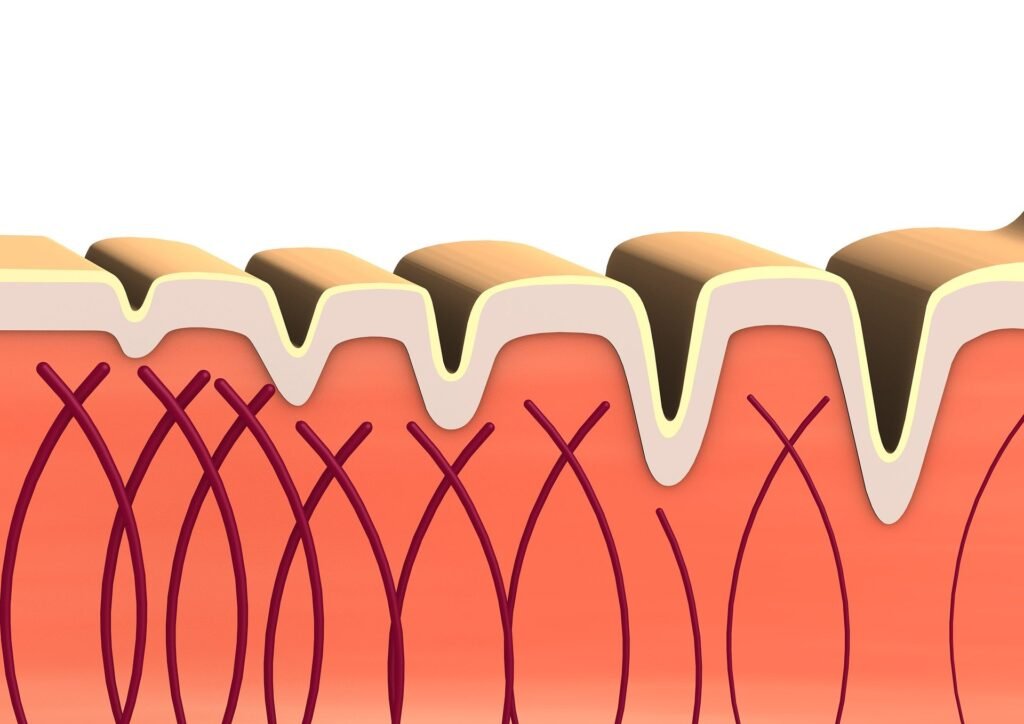
Imagine your skin is a brick wall. The “mortar” holding the bricks together is your natural oil (lipids).
This wall is naturally acidic (around pH 5.5).
Most traditional cleansers—especially bar soaps and high-foaming washes—are alkaline (pH 9–10).
When you put an alkaline soap on an acidic face, you create a chemical reaction that dissolves the mortar.
The Tightness: That sensation is literally your skin cells pulling apart because the oil holding them together is gone. You are left with microscopic cracks that let water escape.
According to dermatological research on [[skin pH and barrier function]], alkaline cleansers significantly delay barrier recovery compared to pH-balanced options.
-
The Fix: Look for a “Low pH” or “pH Balanced” cleanser. It cleans the dirt without eating the mortar.
(If you need recommendations, check our guide on the [[best gentle cleanser for sensitive skin]]).
2. The “Bubble” Addiction (Sulfates)
Psychologically, we think More Foam = More Clean.
Chemically, foam is just air trapped in soap. It does nothing for hygiene.
To get that massive foam, companies use Sodium Lauryl Sulfate (SLS). It is a powerful degreaser. It is great for scrubbing lasagna pans. It is terrible for your face.
If you have oily skin, you probably love that “stripped” feeling. But here is the kickback:
When you strip all the oil, your skin panics and produces double the oil to compensate.
The tight feeling today becomes the breakout tomorrow.
(This cycle is exactly why we wrote our guide on [[oily but dehydrated skin explained]]).
3. The Hot Water Habit
I know. A hot shower feels amazing.
But hot water is a solvent. Think about washing a greasy frying pan. Cold water doesn’t move the grease. Hot water melts it instantly.
Your face is the frying pan.
When you wash with hot water, you are melting your natural lipids and washing them down the drain.
The Rule: If the water is hot enough to steam up the mirror, it’s too hot for your face. Lukewarm is boring, but it’s safe.
Real-Life Micro-Story: The “Tightness” Withdrawal
“I grew up using a famous orange acne wash. Every morning, my face felt like it was made of plastic wrap—tight, shiny, and immobile. I thought, ‘Good, the acne bacteria is dead.’
Whatever bacteria I killed, I took my barrier with it. My acne got redder and angrier.
I finally switched to a boring, creamy cleanser that didn’t foam. It felt like… lotion. I hated it for three days. I didn’t feel ‘clean.’
But by Day 4, the redness faded. By Day 7, the tightness was gone. My skin wasn’t dirty; it was just finally calm.”
The “Clean” Matrix (What to Feel for)
Stop judging your cleanser by the bubbles. Judge it by the after-feel.
| How it feels | What happened | Verdict |
| Squeaky / Draggy | You stripped the Acid Mantle. |  Trash it Trash it |
| Tight / Itchy | pH shock (too alkaline). | Trash it |
| Soft / Flexible | Dirt gone, lipids stayed. |  Keep it Keep it |
| Slightly Slippery | Hydrating film left behind. | Great for dry skin |
Final Thoughts: Respect the Barrier
Your face is not a kitchen floor. It doesn’t need to be scoured.
Skin feeling tight after washing is not a sign of success; it’s a biological SOS signal.
If your skin feels tight after washing, your routine is too aggressive.
Switch to a low-pH, non-foaming cleanser for 7 days.
If the tightness disappears, you’ve found the real definition of “clean.”
(For more help, read our complete guide on [[how to repair skin barrier]]).
Frequently Asked Questions
Is tight skin good for anti-aging?
No. It makes you look older. That “tight” feeling is actually dehydration. When skin cells lack water, they shrivel up like raisins, making fine lines look deeper and more obvious. Hydrated skin is plump skin.
Can I just fix the tightness with moisturizer?
Sort of, but not really. Putting moisturizer on stripped skin is like apologizing after you punched someone. It helps, but the damage is done. It is much better to simply not punch the person (don’t strip the skin) in the first place.
How do I know if my cleanser is high pH?
The “Sting” Test. If your eyes sting when the foam gets near them, or your skin feels tight immediately after rinsing, the pH is likely too high. You can also buy cheap litmus strips online to test your products at home.
