
Why Moisturizers Cause Breakouts: The Hidden Triggers in Your Cream
It is the ultimate betrayal. You buy a moisturizer to heal your dry, flaky skin. You apply it religiously, expecting a glow. Instead, three days later, you wake up with a cluster of tiny whiteheads on your chin or painful cysts on your cheeks.
You think, “Maybe my skin is just purging?”
Let’s stop right there. True purging is caused by actives like retinoids and exfoliating acids—not basic moisturizers. If a plain moisturizer is giving you bumps, that isn’t a detox. That is a breakout.
When we analyze why moisturizers cause breakouts, we aren’t usually looking at an “allergy.” We are looking at a specific condition called Acne Cosmetica—the medical term for when a moisturizer is breaking you out due to pore-clogging ingredients.
The problem isn’t that you are moisturizing. The problem is likely the weight of the ingredients you chose.
 Quick Answer: The 3 Main Culprits
This is the most common reason why moisturizers cause breakouts even if the bottle says “Non-Comedogenic.”
Moisturizer Breakout Cheat Sheet (TL;DR)
The Trap: Using oils high in oleic acid (like Coconut Oil) on acne-prone skin.
The Sensitivity: Fragrance or essential oils causing irritation bumps (not true acne).
The Clash: Layering silicone over dirty pores, trapping bacteria inside.
The Golden Rule: If you have acne-prone skin, you need “humectants” (water-grabbers like Glycerin), not heavy “occlusives” (sealants like Shea Butter).
1. The “Comedogenic” Lie
You have probably seen the label “Non-Comedogenic” (won’t clog pores). You trust it. You shouldn’t. Here is the dirty secret: The FDA does not regulate that term. A brand can label pure Coconut Oil—which is highly pore-clogging for most people—as “Non-Comedogenic.”
Elite Insight: Instead of reading the marketing, read the ingredient list. Look for the “Big 3” cloggers:
-
Isopropyl Myristate: A texture enhancer that penetrates deep into the pore and often gets stuck there.
-
Coconut Oil / Cocoa Butter: Great for the body, often disastrous for the face.
-
Algae Extract: Often found in “luxury” creams, but notorious for triggering micro-comedones.
2. The “Occlusive” Effect (Trapped Heat)
Moisturizers work by creating a seal over your skin to stop water from evaporating. This is great for hydration, but dangerous for acne. If you apply a heavy cream (like Vaseline or thick night masks) over skin that hasn’t been properly cleansed, you aren’t just trapping moisture. You are trapping bacteria, sweat, and dead skin cells.
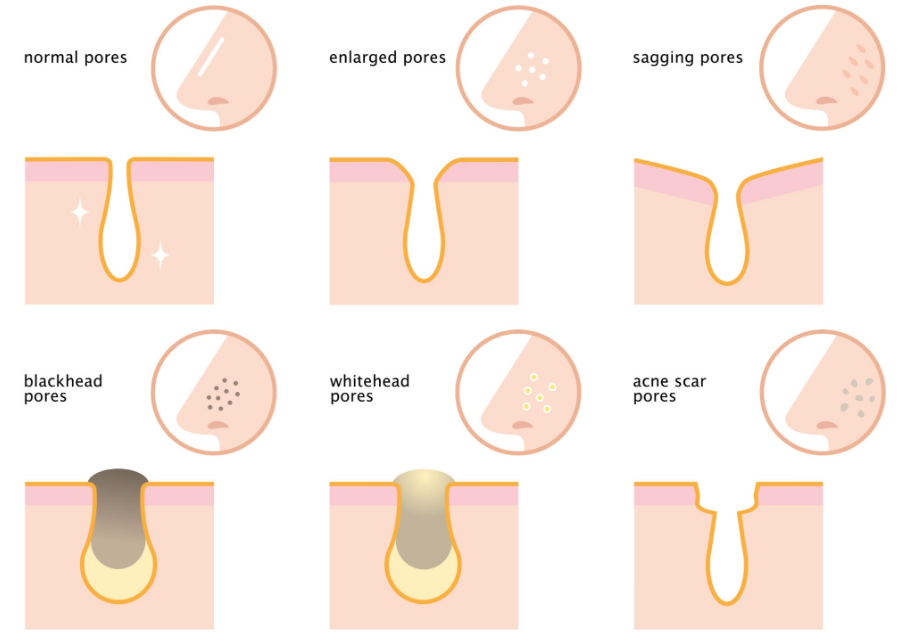
The bacteria (C. acnes) thrive in this oxygen-free environment. Overnight, that “seal” turns your pore into a petri dish. This is why you wake up with whiteheads.
 Do NOT Do This If You Break Out
 Do NOT stop moisturizing completely. (Drying out your skin makes acne worse because your oil glands panic and overproduce sebum). Do NOT use “scrubs” to remove the bumps. (You will rip the barrier and spread the bacteria). Do NOT wait for it to “get better.” (If a moisturizer breaks you out for 3 days, toss it. It won’t adapt).
Why: Acne caused by products is an inflammatory response. You need to soothe it, not attack it.
[Visual Section]
[Insert Image Here] [Image illustration: A comparison chart. Left: “Safe Humectants” (Glycerin, Hyaluronic Acid, Aloe). Right: “Risky Occlusives” (Coconut Oil, Lanolin, Mineral Oil).]
File Name: humectants-vs-occlusives-acne-chart.jpg Alt Text: Chart comparing humectants vs occlusive moisturizer ingredients that cause acne breakouts Caption: Stick to the left side if you are prone to breakouts.
3. Barrier Damage vs. Breakouts
Sometimes, the bumps aren’t acne at all. They are Perioral Dermatitis or irritation bumps. If your moisturizer contains heavy fragrance, essential oils (like Lavender or Peppermint), or high amounts of alcohol, your skin might be reacting with a rash that looks like acne. The Test: If the bumps are itchy and uniform in size (lots of tiny red dots), it’s likely irritation. If they are painful and vary in size (whiteheads and cysts), it’s likely clogging.
Real-Life Micro-Story: The “Natural” Trap
“I switched to a 100% organic facial oil because I thought ‘chemicals’ were making me break out. Within a week, my face was covered in deep, painful cysts. I realized the oil was high in Oleic Acid, which is terrible for my skin type. I switched back to a ‘boring’ oil-free gel moisturizer from the drugstore, and my skin cleared up in 10 days. Natural isn’t always better.”
The Lesson: Poison ivy is natural. That doesn’t mean you should rub it on your face. Chemistry is your friend.
Final Thoughts: Gel is Gold
If you are scared to moisturize again, switch to a Gel-Cream. These formulas often use water and silicone. Don’t fear the “S” word—Silicones are non-comedogenic and sit on top of the skin, allowing water vapor to pass through while preventing moisture loss. They hydrate without the heaviness.
Understanding why moisturizers cause breakouts gives you the power to scan a label and say “No” before you buy. Your skin needs water, not grease.
(If you are struggling to identify if your bumps are acne or a damaged barrier, read our guide on [[How to fix a damaged skin barrier]] first).
Frequently Asked Questions
Q: Can I just skip moisturizer if I have oily skin? A: No. Oily skin can still be dehydrated (lacking water). If you skip moisturizer, your skin will produce more oil to compensate, leading to shinier skin and more clogged pores. Use a lightweight gel instead.
Q: What is the safest moisturizer ingredient for acne? A: Glycerin. It is a humectant that is biologically identical to fluids in your skin. It is extremely rare for Glycerin to cause breakouts.
Q: How long does it take for a moisturizer breakout to clear? A: Once you stop using the clogging product, “Acne Cosmetica” usually clears up within 2–3 weeks. You can speed this up by using a Salicylic Acid cleanser.
